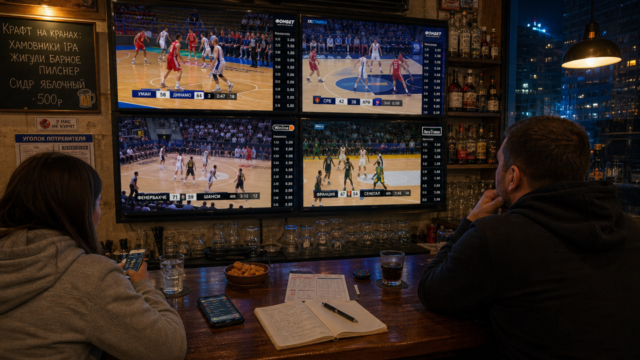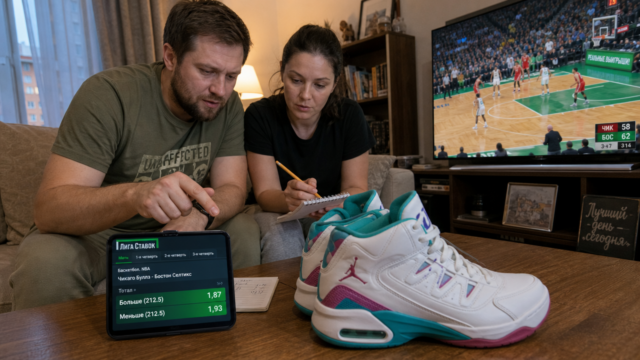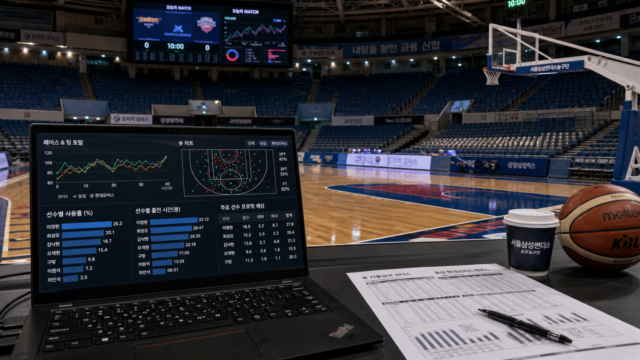

The first number to check on a basketball game is often the spread rather than the moneyline. A home side listed at +2.5 can still cover by losing by two points or fewer, or by winning outright. A side listed at -4.5 must win by at least five points. The line offers a way to compare teams with different recent form, injuries, playing styles, and roster stability.
How to place bets on basketball correctly
Correct basketball betting starts with bankroll control and a suitable sample. A flat stake keeps the amount consistent regardless of the odds and limits the effect of losing runs. A cautious approach is to risk no more than 5 percent of the bank on one bet. Increasing the stake after a loss adds variance rather than improving the underlying selection.
Before placing a bet, review recent form, injuries, motivation, roster turnover, average points scored and allowed, and the opponent’s playing style. Leagues and teams with at least 10 to 15 rounds of available statistics provide a more reliable base than early-season games. A stable lineup also makes recent averages easier to interpret.
Basketball handicap bet: reading the spread like a market
A basketball handicap bet levels the game by adjusting the final score. Positive handicaps add points to the selected side, while negative handicaps require a specific winning margin. Handicaps can apply to a full match, a quarter, or a half. European and Asian formats may settle differently, so check the market rules before placing a bet.
Favorites and underdogs can offer clearer value than evenly matched teams, but the spread still needs to be compared with current form and team news. Avoid relying on early-season numbers when rotations are changing. A useful approach is to calculate average points over the latest 15 games, compare that figure with head-to-head results, and then assess whether the line differs by a meaningful margin.
Best bets on basketball: player props with data
Player props depend on minutes, role, matchup, pace, and injuries. A player total for points, rebounds, or assists should be compared with recent averages rather than judged from one strong performance. Usage can also change when a regular starter is unavailable, so confirm the lineup before betting.
A player prop becomes more attractive when the recent average, expected role, and opponent matchup point in the same direction. If the line already reflects those factors, the price may leave too little value. Passing on a market is preferable to forcing a bet when the available data conflict.
Totals, pace, and market movement
Totals depend on expected possessions, scoring efficiency, defensive quality, and roster news. Compare each team’s recent scoring and conceding averages with the posted total. Team and player totals can also be assessed through recent form and head-to-head data.
Even-odd markets require less analysis than spreads or props. The bet concerns whether the final total is even or odd, and typical odds are around 1.85 to 1.95. The market remains high variance, so it fits better as a small, controlled selection than as a reason to increase stakes.
Live betting can provide more information because the pace, rotations, and shooting level are already visible. Later quarters may offer clearer data than the opening minutes, but a live bet still needs a defined price and a reason for entering the market.
Situational angles: zigzag, flat, and live betting
The playoff zigzag strategy involves backing the team that lost the previous game, usually when it returns home. The approach relies on motivation, travel conditions, and the possibility of a stronger response in the next match. Historical figures cited for this strategy show a win rate of about 56 percent, but the result depends on the league, matchup, injuries, and price.
The selection can be made through the home win market or a negative spread when the odds are favorable. Head-to-head history and travel distance add context, but neither replaces current team news. A back-to-back schedule or an uncertain lineup can weaken the setup.
For match-outcome markets, P1 represents a home win, X a draw where offered, and P2 an away win. A home win may be the more conservative option in some matchups, while an away win generally carries greater risk. Use flat staking across a series of bets rather than increasing the amount after losses.