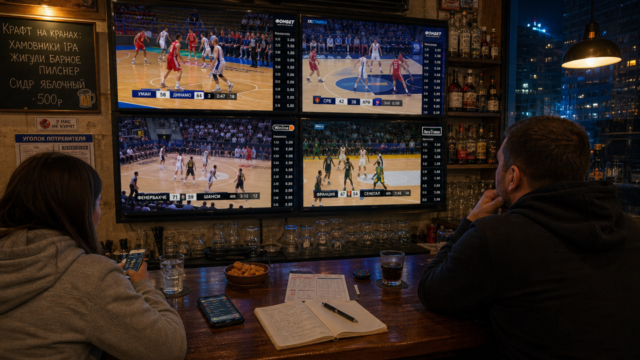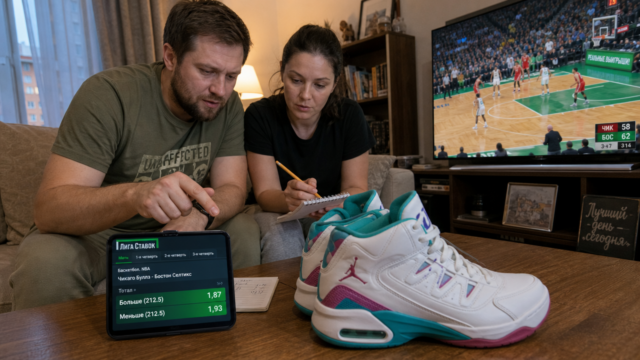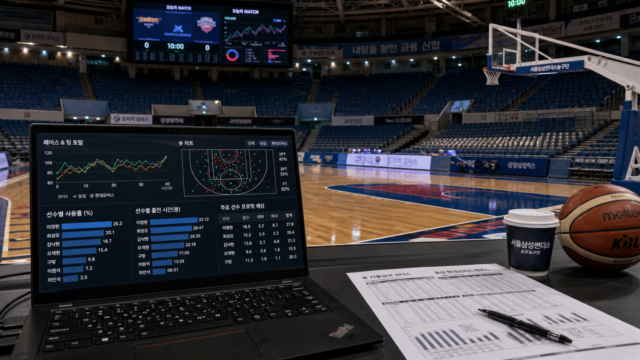

Basketball betting today can focus on quarter markets, player props, and totals rather than only the full-game result. Expert forecasts commonly assess motivation, injuries, lineups, recent form, and statistical trends before selecting a wager.
Quarter bets reduce exposure to late-game free throws and changes in rotation. A first-quarter wager also uses a shorter sample, so each possession has a greater effect on the result. Compare the opening line with recent team performance, pace, and defensive numbers before placing a bet.
A common basketball quarter betting strategy uses a chase format: bet on a clear first-quarter favorite with a -1.5 or -0.5 handicap, or take an underdog with a +1.5 or +0.5 handicap. If the first quarter loses, some systems recommend doubling the stake on the same handicap in the second quarter during the break. This approach needs a hard cap because repeated increases can quickly exhaust a bankroll.
A more cautious staking plan limits each bet to a fixed share of the bankroll. One published strategy recommends risking no more than 5% in total and avoiding higher stakes after losses. With a $1,000 bankroll, a 1% opening bet equals $10, while a 2% second-quarter stake equals $20. The combined exposure is $30 rather than an unlimited progression.
Player props require the same process as side and total markets. Check expected minutes, starting status, recent usage, rebounds, assists, and the opponent’s defensive profile. Stable lineups and consistent roles are especially useful when the available sample covers 10 to 15 rounds.
Four common prop categories are actionable when the supporting data is available:
| Prop category | What to check | Betting condition |
|---|---|---|
| Player points | Minutes, usage, and opponent defense | Compare the line with recent scoring averages |
| Player rebounds | Shot volume and missed-shot rate | Favor stable minutes and interior involvement |
| Player assists | Ball-handling role and pace | Check the player’s passing opportunities |
| Individual player totals | Role, matchup, and lineup news | Avoid the market if the role is uncertain |
For total markets, calculate an expected score by combining each team’s general scoring average with its head-to-head average. Add the two estimates to create an expected total, then compare it with the bookmaker’s line. A higher projection supports an over position, while a lower projection supports an under position. Odds around 2.0 to 2.5 may be used in the published method, but the stake should remain controlled.
Regular-season games generally offer a larger scoring environment than playoff games, so regular-season data should not be transferred directly to postseason markets. Quarter totals also need separate treatment from full-game totals because pace and rotations can change as the game progresses.
For Canadian bettors, compare quarter lines, player props, and totals across regulated online operators before placing a wager. A half-point difference can materially affect a spread bet. Check the lineup and injury report again before confirming the selection, especially when a player’s minutes or starting role is uncertain.
The strongest basketball betting strategies use flat staking rather than aggressive recovery systems. Keep a record of the league, market, odds, line movement, and result. Expert statistics can help measure whether a forecasting approach is performing consistently, but no method removes the risk of loss.
A disciplined card may include one quarter spread, one player prop, or one total supported by enough data. Pass when the line moves beyond the calculated edge, the lineup is unclear, or a chase would push total exposure above 5% of the bankroll.