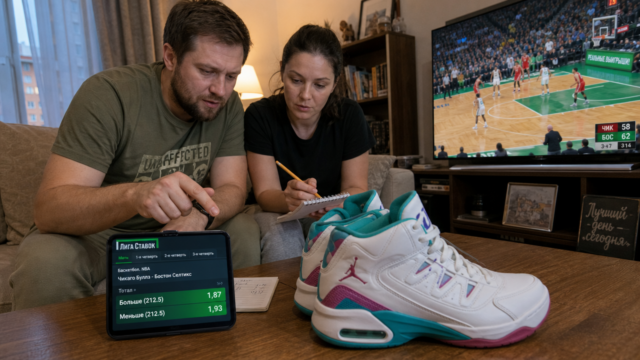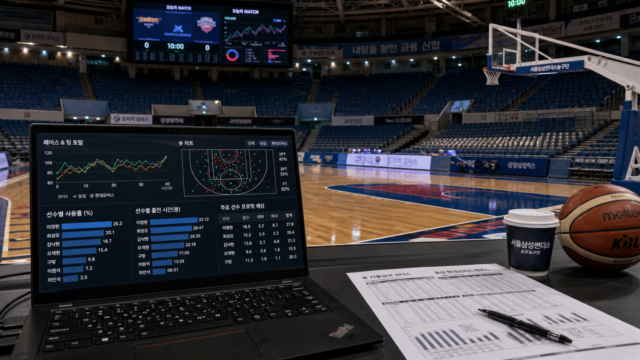
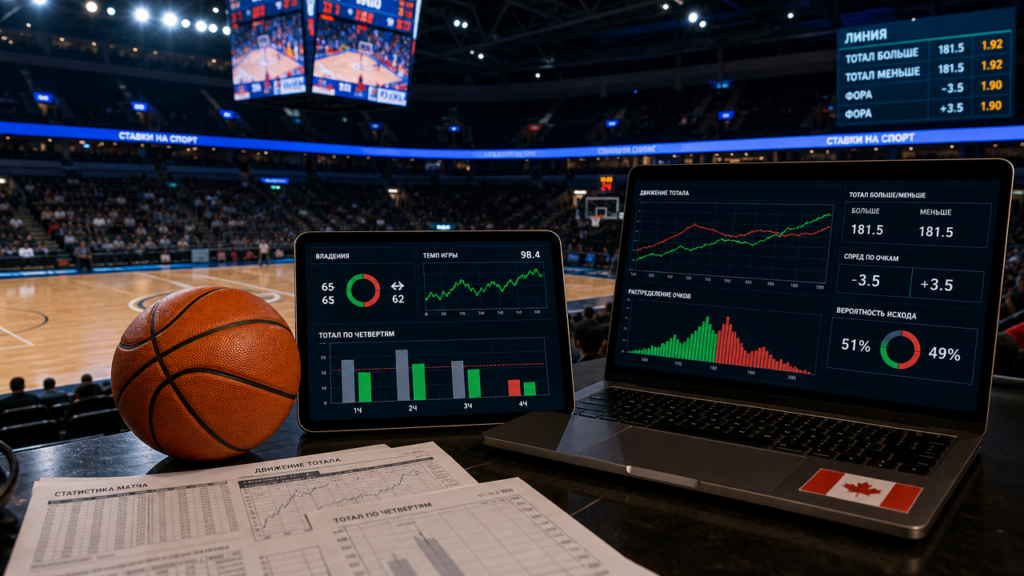
Basketball totals betting focuses on possessions, pace, and rotation depth. A full-game total can change after injury news, but recent scoring alone is not enough to assess the number. Start with opponent pace, expected lineups, and the availability of key ball-handlers.
Build the Full-Game Total from Possessions, Not Points
A sharper method than averaging recent scores is counting possessions. Use the formula FGA + 0.44*FTA – OR + TO, where the 0.44 factor accounts for partial free-throw possessions. Combine the projected pace with points per 100 possessions for both teams to estimate the likely scoring level.
Fewer possessions usually produce lower totals, while faster games create more opportunities to score. Recent results still matter, but adjust them for changes in rotation, pace, and defensive quality. A team with a strong recent scoring average may still be a poor over selection if its opponent slows the game or limits transition chances.
Quarter Totals: Compare the Game Segments
Quarter totals split basketball totals betting into 10- to 12-minute segments. Q1 is often more predictable because both teams use their primary lineups. Q2 introduces more bench players, which can change the pace and shot profile. Q3 may become more productive after halftime adjustments. Q4 is volatile because of tactical fouls, late shot selection, and possible garbage time.
Compare each quarter with the expected rotations rather than treating every segment as identical. Bench depth, lineup changes, and pace are especially relevant when assessing Q2. A pregame Q4 total carries more uncertainty than a Q1 line, while live betting can provide more information about tempo and player usage.
Player Props: Compare the Line with the Role
Basketball totals markets can also cover player points, rebounds, and assists. Start with the player’s recent average, then check expected minutes, usage, matchup, and changes to the team’s rotation. A recent hit rate is not enough on its own: a change in role or playing time can quickly alter the projection.
Individual totals can be assessed in the same way as team and game totals. Compare the line with a reasonable statistical expectation, and avoid relying on a small sample without checking the underlying minutes and opportunities.
Live Totals and Market Movement
Live basketball totals provide information that is unavailable before tipoff. Compare the current pace and score with the pregame expectation, then check whether the difference comes from sustainable factors or temporary shooting variance. A large lead can reduce the pace, especially late in the game, but tactical fouls may create extra possessions and points.
Risk control matters when using live markets. Keep stakes within a fixed share of the bankroll, and avoid increasing them simply to recover an earlier loss. Doubling systems and progression methods can increase exposure quickly, so they require particular caution. For pregame bets, compare available lines and prices because a small difference in the total can change a pass into a playable number.